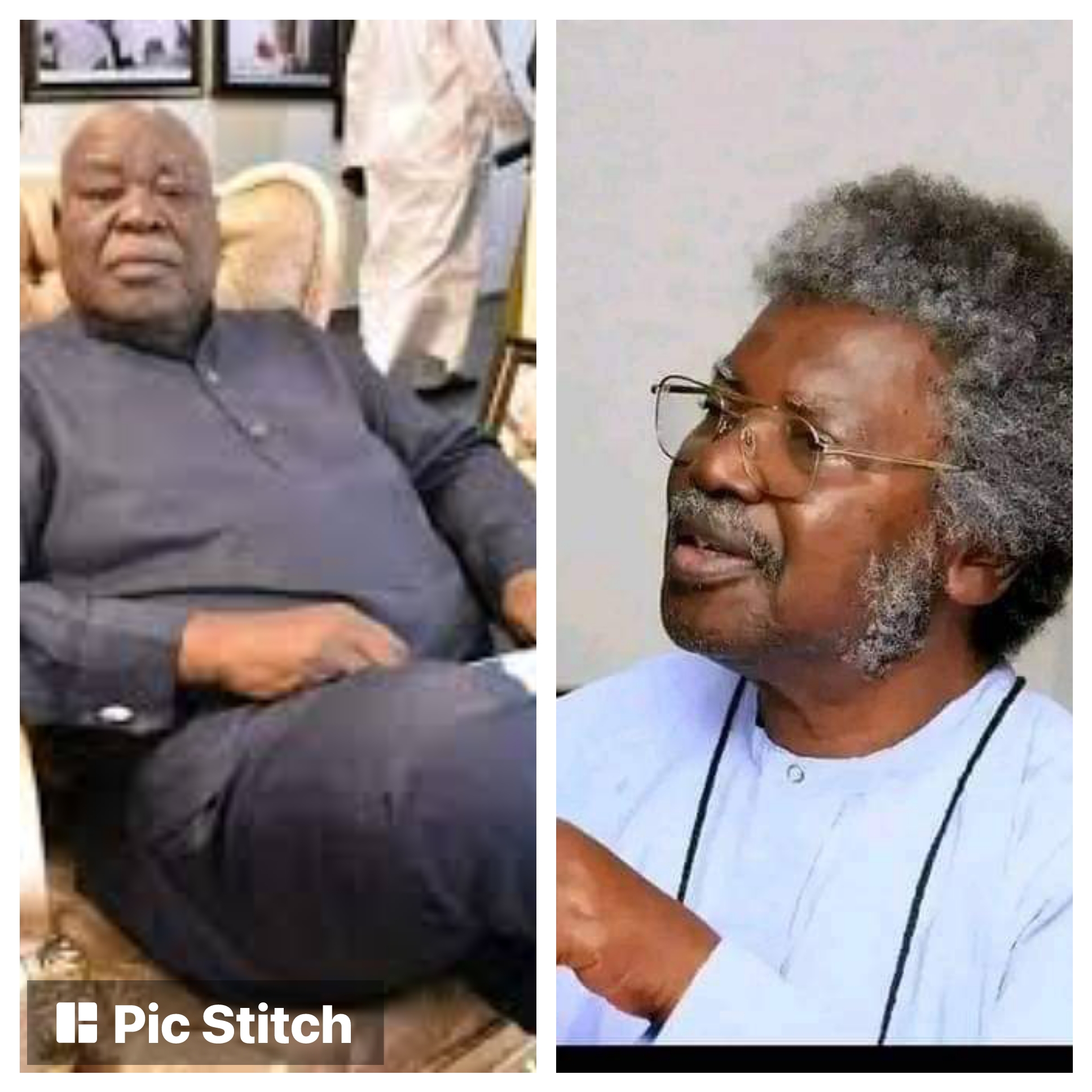
Remembering Wantaregh Paul Iyorpuu Unongo: A Legacy of Leadership and Resilience in Tivland and Beyond
Introduction
As the Tiv community gathers from November 26 to November 30 to pay final respects to Wantaregh Paul Iyorpuu Unongo in his hometown near Jato Aka, Kwande Local Government Area of Benue State, the memory of an extraordinary life reverberates across the land. Through the words of Chief Simon Shango, MFR, Smearbusters presents a reflective account of Unongo’s towering contributions, chronicling the depth of his influence in the realms of education, business, and Nigerian politics. Unongo, a tenacious leader and a mentor to countless young Tiv men and women, left an indelible mark on his community, his family, and his nation.
Early Encounters with a Future Leader
Chief Shango recalls his first meeting with Unongo in the early 1960s at the annual convention of the Community of Tiv Students (CTS) in Gboko. At the time, Unongo was already a charismatic figure, the president of CTS, advocating for education and community development among young Tiv scholars. The era marked a period of significant transformation for the Tiv community, with only a handful of educated individuals, including notable figures like J. Adom Gande, Apollos Aper Aku, and Ezekiel Aker Akiga. Unongo emerged in the second wave of Tiv intellectuals, attending the Nigerian College of Arts, Science, and Technology in Zaria.
Shango, a contemporary of Unongo, marvels at how the once-small cadre of Tiv scholars has grown into a thriving community of intellectuals, with many distinguished professors and experts now representing the Tiv nation in every field of endeavor.
Unongo’s Early Career and the Pursuit of Higher Education
Following their early encounters, Shango and Unongo briefly parted ways, with Unongo embarking on a career as a social welfare officer with the Northern Nigerian government. Working in Kaduna, Unongo crossed paths with his brother-in-law, Professor Justin Tseayo, with whom he shared a passion for social development and progress. Both men later went abroad to further their education, Unongo to Canada and Tseayo to the United Kingdom.
In Lagos, Unongo returned to academia, securing a teaching position at the University of Lagos through the influence of J.S. Tarka. It was here that Unongo began to emerge as a scholar with a growing sense of purpose and a commitment to mentoring young Nigerians. Shango recalls their reconnection during his own duties in Lagos and describes Unongo as an intellectual powerhouse whose presence commanded respect and admiration from students and colleagues alike.
Building an Empire: JULADACO Company and Philanthropy
Unongo’s entrepreneurial spirit took root in the mid-1970s when he founded JULADACO Company Limited in Jos, partnering with Dr. George Okon. Under Unongo’s leadership, JULADACO flourished, expanding into sectors such as housing, transportation, education, and healthcare. The company’s impact on the community was profound, with JULADACO High School producing numerous successful leaders, including Rochas Okorocha, a former governor of Imo State, and Becky Orpin, a journalist and current member of the Benue State House of Assembly.
Shango notes that JULADACO operated much like a government entity, offering scholarships and resources to uplift the Tiv people. Recipients of these scholarships included notable figures like Professor Steve Igba, now a commissioner in Nigeria’s Revenue Mobilization, Allocation and Fiscal Commission, and Jonathan Ichaver, a distinguished accountant. Through JULADACO, Unongo nurtured a generation of educated Tiv youths, fostering in them a sense of responsibility and leadership that would later drive their own successes.
Unongo and J.S. Tarka: A Divergence in Political Vision
As Nigeria transitioned toward state creation, Unongo moved from Lagos to Jos, where he collaborated with Commissioner of Police J.D. Gomwalk, the first governor of the newly established Benue-Plateau State. It was during this period that Unongo published his influential booklet, *Where Do We Go From Here?* which advocated for the division of the large Tiv Native Authority into more manageable administrative divisions.
This stance placed him at odds with J.S. Tarka, a respected leader and fellow Tiv nationalist. The ideological split marked the beginning of a division within Tiv political circles, with Unongo rallying support among those who favored greater administrative decentralization. This period saw the emergence of the “Unongo Group,” which championed a new political vision and attracted a strong following among Tiv elites. Despite the political rift, both Unongo and Tarka remained deeply respected leaders, each representing different aspirations for their people.
The JULADACO Legacy and Unongo’s Role in Education
Beyond his political ideals, Unongo’s JULADACO legacy continued to shine, even as he delved deeper into national politics. In addition to his businesses, Unongo was instrumental in the education and professional advancement of many young people. Chief Shango recounts how Unongo personally mentored countless young Tiv men and women, providing them not only with scholarships but also with opportunities to excel in various fields.
Unongo’s own children—Jude, Pauline, David, and Lante—were educated overseas and chose to live quietly in the background, a testament to Unongo’s belief in humility and service. While he embraced a larger-than-life public persona, Unongo’s private life remained deeply family-centered, a balance that Chief Shango highlights as central to his character.
A Political Fighter in the Second Republic
In 1979, when Nigeria transitioned to civilian rule, Unongo joined the Nigerian People’s Party (NPP), led by Waziri Ibrahim and Nnamdi Azikiwe. With his followers, he helped build a political movement that embraced unity and progress. Unongo’s influence secured him the role of Minister of Steel, a position he used to promote national development and economic growth.
Although he never held an elected office, Unongo’s contributions to Nigerian politics remain deeply respected. His fierce advocacy for justice and equality earned him a place among Nigeria’s influential leaders. His legacy, Chief Shango reflects, is not measured by titles but by the enduring impact of his ideas and ideals.
Remembering Mrs. Vicky Averave Unongo: A Pillar of Strength
Chief Shango also pays homage to Unongo’s late wife, Mrs. Vicky Averave Unongo, who was Shango’s own aunt and the sister of Professor Tseayo. She was, in Shango’s words, the “pillar of the Unongo dynasty,” supporting her husband’s ambitions while anchoring the family with grace and dignity. Her role in Unongo’s life, though often understated, was instrumental to his success and stability.
A Legacy of Influence and Inspiration
As Wantaregh Paul Iyorpuu Unongo is laid to rest, Chief Simon Shango closes his reflections with a recognition of Unongo’s remarkable life. Known as a philanthropist, intellectual, and businessman, Unongo leaves a legacy of resilience, courage, and love for his community. His image as a “fighter for justice” resonates not only in Benue State but across Nigeria and beyond, inspiring future generations to carry on his vision of equality and social progress.
Chief Shango’s tribute serves as a testament to Unongo’s deep ties with his community, his love for his people, and his unwavering dedication to the pursuit of justice. Though he is gone, Unongo’s spirit endures, guiding and inspiring all those who remember him as a man of purpose, strength, and profound compassion.
A Lasting Impact
As Smearbusters reflects on Chief Shango’s tribute, it is clear that Wantaregh Paul Iyorpuu Unongo was not only a leader but also a beacon of hope and resilience for the Tiv people and all of Nigeria. His legacy lives on, not only in his family and community but in the ideals he so passionately championed. Rest in peace, Wantaregh, a true fighter and a beloved icon of the Tiv nation.
