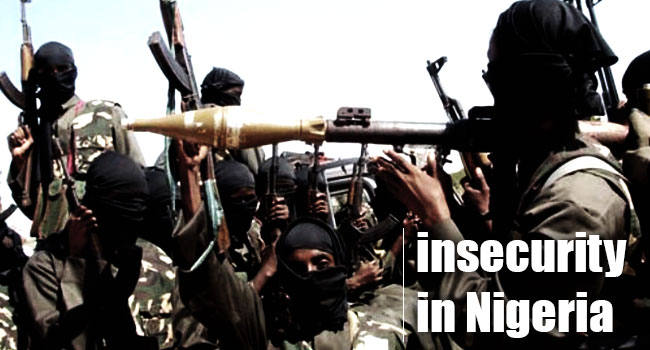
Nigeria, Africa’s most populous nation and largest economy, is facing a worsening crisis of insecurity. This has become a major challenge for both the government and its citizens. The country suffers from various forms of violence, including banditry, kidnapping, armed herdsmen attacks, and other criminal activities, which have created a climate of fear and uncertainty. This essay examines the current state of insecurity in Nigeria, the government’s struggles in addressing it, and the devastating impacts on the economy, local businesses, and the lives of ordinary Nigerians.
Forms of Insecurity in Nigeria
Banditry
Banditry has become one of Nigeria’s most severe security challenges, particularly in the northern and central parts of the country. Armed groups, often called “bandits,” engage in violent raids on rural communities, robbing, looting, and abducting people for ransom. The Northwest region, especially states like Zamfara, Katsina, and Kaduna, has been hit hard. These bandits operate with impunity, exploiting vast ungoverned spaces and inadequate policing. According to the UNHCR, over 200,000 people have been displaced in Zamfara State alone due to banditry. The Nigeria Security Tracker reported over 1,000 banditry incidents in 2022, reflecting an increasing trend.
Kidnapping
Kidnapping for ransom has become a widespread issue in Nigeria, with incidents occurring almost daily across the country. Kidnappers target individuals, including wealthy citizens, expatriates, and even schoolchildren, demanding large sums of money for their release. The abduction of over 300 schoolgirls in Chibok, Borno State, in 2014 by Boko Haram was an early indication of this problem’s scale, but kidnappings have since spread to other regions and increased in frequency. In 2022, the Nigeria Police Force reported over 3,000 kidnapping cases, while Amnesty International documented more than 10 incidents involving schoolchildren.
Armed Herdsmen Attacks
Armed herdsmen attacks represent another layer of insecurity in Nigeria, often connected to conflicts over land, grazing rights, and resources between Fulani pastoralists and agrarian communities. States like Benue, Plateau, and Taraba have experienced violent confrontations leading to significant casualties, property destruction, and the displacement of thousands. The International Crisis Group reported over 1,500 deaths in 2022 due to herdsmen-farmer clashes, while the UNHCR noted over 300,000 displaced people in Benue State alone.
Terrorism
Boko Haram and its splinter faction, the Islamic State West Africa Province (ISWAP), have terrorized the Northeast region for over a decade. These groups have carried out numerous attacks, including suicide bombings, mass killings, and the destruction of communities. The insurgency has resulted in the deaths of over 35,000 people and displaced millions, creating one of the world’s largest humanitarian crises. In 2022, the Nigeria Security Tracker reported over 500 terrorist attacks attributed to Boko Haram and ISWAP, while Premium Times reported over 20 attacks on military installations.
Other Forms of Insecurity
Other forms of insecurity, such as armed robbery, cultism, ethnic militias, and communal clashes, have also been on the rise. The Niger Delta region, for instance, has seen acts of pipeline vandalism and militant attacks on oil installations, affecting the country’s oil output. In urban centers like Lagos, Ibadan, and Port Harcourt, violent crimes such as armed robbery and cult clashes have created an atmosphere of unease among residents.
Government’s Challenges in Addressing Insecurity
The Nigerian government, led by President Muhammadu Buhari, has struggled to contain the escalating insecurity. Several factors have contributed to these struggles:
– Inadequate Security Infrastructure: Nigeria’s security agencies, particularly the police and military, suffer from inadequate funding, training, and equipment. The police-to-citizen ratio is far below the United Nations’ recommended standard, and the military is overstretched, engaged in multiple internal security operations across the country.
– Corruption and Mismanagement: Corruption within the security sector has undermined efforts to fight insecurity. Reports of security funds being misappropriated by officials have led to inadequate resources for frontline troops.
-Poor Governance and Weak Institutions: The absence of effective governance and weak institutions, especially at the local level, has created a vacuum exploited by criminal elements.
Ethnic and Religious Tensions: Ethnic and religious divisions have further complicated the security landscape. Conflicts involving ethnic or religious factors have deepened the crisis.
Impact of Insecurity on Nigeria
Economic Impact
Insecurity has severely impacted Nigeria’s economy. Foreign investors, once attracted by Nigeria’s market potential, are now reluctant to invest due to the high risks associated with the country’s instability. The Nigerian Economic Summit Group estimated that the country lost over N3 trillion to banditry and kidnapping in 2022. The National Bureau of Statistics reported a 50% drop in foreign direct investment in the same year.
Social Impact
Insecurity has deeply affected the social fabric of Nigerian society. Thousands of people have been killed, and many more displaced, creating a large population of internally displaced persons (IDPs) who live in camps under dire conditions. The UNHCR reported over 3 million IDPs in Nigeria, while the UNOCHA noted over 7 million people in need of food assistance in the Northeast alone.
Political Impact
Rising insecurity has also created political challenges for the Nigerian government. Public trust in the government’s ability to provide security has significantly eroded, leading to growing frustration and disillusionment among the populace.
Humanitarian Crisis
The insecurity in Nigeria has created one of the world’s largest humanitarian crises. Humanitarian organizations operating in the region face constant threats from armed groups, limiting their ability to provide much-needed aid to affected populations.
Conclusion
Insecurity in Nigeria has reached alarming levels, threatening the country’s stability, economic development, and social cohesion. The government’s efforts to address these challenges have been hampered by inadequate security infrastructure, corruption, poor governance, and deep-rooted ethnic and religious tensions. As insecurity continues to soar, foreign investors are leaving, local businesses are collapsing, and people are living in constant fear. It is crucial for the government to take decisive actions to protect its citizens, rebuild trust in state institutions, and create an environment conducive to peace, security, and economic growth. Without significant changes in strategy, the specter of insecurity will continue to cast a shadow over Nigeria’s future.
