
MBADINUJU SYNDROME IN BENUE: HOW GOVERNOR ALIA IS WALKING A FAMILIAR PATH OF OBSTINACY, INTIMIDATION, AND POLITICAL SELF-DESTRUCTION
*Why Governor Alia May Snub the Abbas-Led APC Reconciliation Committee
By Morgan Adikwu
History rarely announces itself loudly. More often, it returns quietly, through patterns, habits, and unchecked impulses. For those who remember Anambra State between 1999 and 2003, the rise and fall of Chinwoke Mbadinuju stands as a grim reminder of how power, once detached from restraint, party discipline, and institutional respect, collapses under its own weight.
Today, as President Bola Tinubu constitutes yet another high-powered APC reconciliation committee for Benue State, chaired by Speaker Hon. Abbas Tajudeen, political observers are already drawing an uncomfortable conclusion; Governor Hyacinth Alia is unlikely to heed it, just as Mbadinuju ignored every warning sign before history closed in on him.
This is not conjecture. It is pattern recognition.
Mbadinuju entered office with impressive credentials, academic pedigree, elite political exposure, and the promise of reform. Alia similarly ascended to power wrapped in clerical symbolism, moral rhetoric, and public expectation. Yet in both cases, governance gradually gave way to personal supremacy, reconciliation to reprisal, and leadership to control.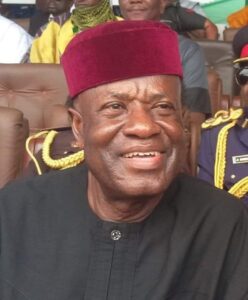
In Anambra, that control was formalised through the Anambra Vigilante Services, a state-backed structure that normalised intimidation under the guise of order. In Benue today, critics argue that Alia has adopted a political equivalent. The chant “No Alia, No Benue” mirrors the same supremacist logic, absolute loyalty to one man elevated above party, law, and collective identity.
Different instruments, same mindset. Where Mbadinuju relied on vigilante enforcement, Alia is accused of deploying state machinery, administrative coercion, and partisan enforcement to achieve similar ends.
Observers increasingly point to the weaponisation of institutions in Benue. The governor’s hostile posture toward the legislature, his contempt for party hierarchy, and his selective engagement with democratic checks echo the Anambra experience. Mbadinuju’s downfall did not begin with defeat at the polls; it began when institutions were treated as inconveniences rather than safeguards. Benue, analysts warn, is treading that same path.
Central to this comparison is Alia’s systematic persecution of APC members perceived to be loyal to Senator George Akume, Secretary to the Government of the Federation, including the duly elected Benue APC State Executive Committee led by Comrade Austin Agada, the very structure that produced his governorship.
Like Mbadinuju, who turned on his political pillars once power was secured, Alia appears intent on dismantling the very architecture that legitimised him. History records how such ingratitude ends.
Reports from political and business circles in Benue describe a climate of intimidation and selective enforcement, sealed premises, regulatory harassment, and administrative pressure against perceived dissenters.
Analysts see in this the early warning signs of authoritarian consolidation. What Mbadinuju achieved through vigilante terror, Alia is alleged to be approximating through bureaucratic force and loyal enforcers.
It is within this context that the Speaker Abbas-led reconciliation committee must be understood. This is not the first attempt to rescue Benue APC from implosion. Party insiders recall how previous national delegations sent to restore peace were rendered irrelevant almost immediately, with resolutions violated before emissaries could retreat across the River Benue Bridge.
Others reference the high-powered Abuja peace parley, convened to arrest the crisis, which the governor allegedly snubbed, feigning ill health and returning to Makurdi rather than submit to party mediation. These episodes are why many within the party are already predicting that the current reconciliation effort will meet the same fate.
This, too, is where the Mbadinuju parallel sharpens. Faced with mounting opposition and party intervention, the former Anambra governor chose defiance over dialogue, until the party itself withdrew protection. He reportedly won primaries yet was denied the ticket. Power abandoned him long before the public did.
Governance outcomes further reinforce the comparison. In Benue today, insecurity persists, economic confidence is weak, and public trust continues to erode despite the centralisation of authority. Heavy control has not translated into tangible improvement, just as it failed under Mbadinuju. History is unforgiving in this regard.
Many Nigerians have forgotten Chinwoke Mbadinuju, not because his era was insignificant, but because history buried him as a cautionary tale. That caution is now resurfacing in Benue. Alia’s obstinacy, his rejection of restraint, and his apparent belief that power answers only to itself place him on a collision course with the same political fate.
Political power is rarely lost in a single moment. It erodes, through arrogance, isolation, and the refusal to listen. As 2027 approaches, seasoned observers increasingly agree on one thing, Governor Alia is not defying history; he is reenacting it. And like Mbadinuju, he may soon discover that no slogan, no machinery, and no personal supremacy can outlast party structure, institutional memory, and time.
