
ABBA MORO vs. ALIA (II):
THE SILENCE, THE EXCLUSION, AND THE POLITICS OF PERSECUTION IN BENUE SOUTH
*How the US Delegation Snub Confirmed What Many Already Know
By Morgan Adikwu
For weeks, I observed the exchanges and counter-statements that followed Senator Abba Moro’s pointed question in Ogbadibo, Why has Governor Hyacinth Alia abandoned Benue South?
I listened to defenders of the governor, his loudest apologists, and even those from Benue South who now find comfort in attacking any agitation that reflects the pain of their own people.
Then the United States Congressional delegation visited Benue and Zone C was excluded.
That single act did more to validate Abba Moro’s position than volumes of rhetoric. The exclusion of Benue South from an international fact-finding mission on insecurity and displacement was not accidental. It was structural, political, and revealing.
It laid bare a pattern of MARGINALISATION, DISCRIMINATION, and SYSTEMATIC EXCLUSION that has come to define governance under Governor Alia.
Predictably, defenders rushed to argue that the visit was not state-driven. But governance is not an exercise in technical excuses. The governor is the Chief Security Officer of the state and custodian of authority, resources, and influence. If Benue South mattered, it would not require lobbying or outrage to be seen.
What followed exposed an even deeper malaise, the deafening silence of many aspiring senators from the zone. These are men who seek to represent Benue South yet cannot speak when their people are ignored. Frantz Fanon warned against such conduct in The Wretched of the Earth, the onlooker, he said, is either a coward or a traitor. Benue South is now crowded with such onlookers, choosing convenience over courage.
More troubling are those who go beyond silence to actively undermine genuine agitation. When someone from Benue South adopts the language of power to suppress the cry of his own people, history offers accurate descriptions, COLLABORATOR, SELLOUT, QUISLING, CO-OPTED. Fanon considered these figures more dangerous than silent observers because they help perfect oppression.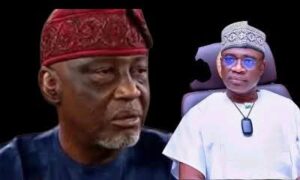
Governor Alia’s leadership increasingly reflects a pattern of EXCLUSIONARY POLITICS. His administration is widely perceived as SUPREMACIST, TRIBALIST, and CHAUVINIST, not in crude racial terms, but in political behaviour that consistently privileges one bloc while diminishing another.
This perception is particularly jarring given that Governor Alia is a supposed Reverend Father. Moral authority carries expectations of fairness, empathy, and justice. Yet, under his watch, Benue South has faced repeated neglect, in security attention, infrastructure presence, humanitarian engagement, and even international visibility.
When exclusion becomes consistent, it ceases to be coincidence and begins to resemble PERSECUTION.
Some may dismiss this as politics. Others see POLITICAL REPRESSION, DISENFRANCHISEMENT, even ETHNOCIDE, not physical annihilation, but the systematic erosion of relevance, voice, and dignity through deliberate neglect. It is CULTURAL SUPPRESSION enforced by silence and selective governance.
Against this backdrop, Abba Moro’s advocacy appears not reckless, but responsible. Representation is not flattery of power, it is speaking when your people are hurt. His consistent interventions on insecurity, neglect, and now international exclusion fill a vacuum others were too afraid to occupy.
Equally disturbing is the silence of Benue South members of the State Assembly. Constitutionally positioned to check the executive, they have chosen comfort over confrontation. In Fanon’s framing, they too belong to the class of onlookers, watching their people fade politically while calling neutrality wisdom.
The US delegation’s failure to visit Zone C did not create this reality; it merely exposed it. And it reinforced what Abba Moro has maintained all along, a zone that is consistently excluded is a zone that has been abandoned.
History is watching. Benue South must also watch closely, not only the governor, but those who seek to represent it while quietly aiding its marginalisation.
