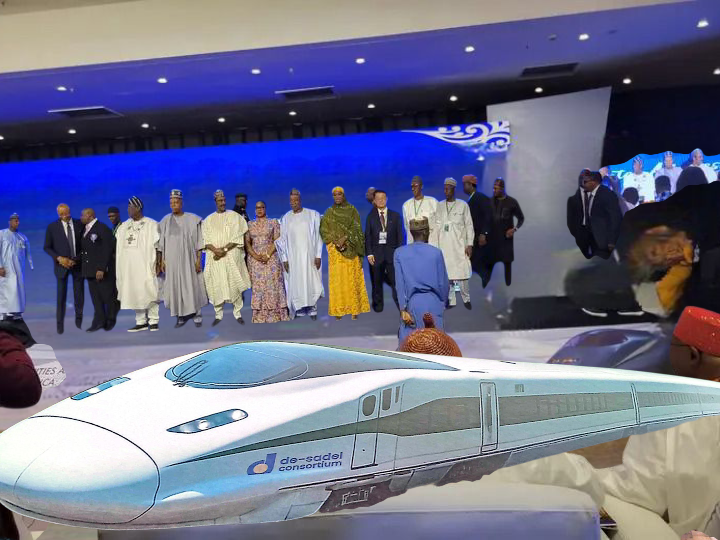
NIGERIA HOSTS HISTORIC INTERNATIONAL RAILWAY SUMMIT
*Africa’s First, World’s Second: Charting a High-Speed Future for Growth, Trade, and Integration
By Morgan Adikwu
When the curtains opened on the International Railway Summit & Expo 2025 at the Ladi Kwali Conference Hall, Abuja Continental Hotel, history was made. For the first time on African soil, and only the second time globally, the world gathered to place railways at the center of the continent’s development aspirations.
Declared open by President Bola Ahmed Tinubu, represented by Vice President Kashim Shettima, the summit projected Nigeria not just as a host, but as a leader of Africa’s march towards modern transportation.
The event, convened by the Federal Ministry of Transportation and powered by the De-Sadel Consortium, was far more than a conference, it was a declaration of intent. For Nigeria, it underscored the nation’s determination to transform its transportation landscape through an ambitious 4,000km high-speed rail network capable of reaching 350km/h. If realized, this bold project would see Lagos to Abuja covered in just two hours and thirty minutes, Abuja to Port Harcourt in two hours fifteen minutes, and Abuja to Kano in barely one hour twenty minutes. Such connectivity, unprecedented in Africa, would change the economic geography of the nation.
The discussions at the summit were framed around key themes that matter deeply to Africa’s future: how to build cross-border railway corridors that can drive trans-African trade; how to innovate financing models that will attract investors and international development banks; how to reposition the railway sub-sector to meet the 21st-century demands of urbanization and commerce; and how to confront pressing issues of railway safety, security, and sustainability. Above all, participants were invited to reflect on the transformative promise of high-speed rail as a tool to unlock Africa’s connectivity and competitiveness.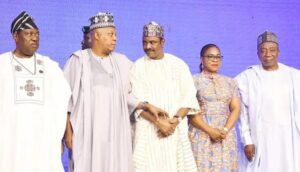
What distinguished this gathering was not just its agenda but its cast of actors. It was a meeting of minds and institutions across multiple layers of the value chain. In the room were transport ministries from Nigeria, Ghana, and Benin Republic, alongside state commissioners of transport, the Nigerian Railway Corporation, and regulatory bodies such as the Nigerian Communications Commission.
Academic institutions like the Nigerian Institute of Transportation Technology brought research insights, while multilateral financiers, including the World Bank Group, the Islamic Development Bank, and the ECOWAS Bank for Investment and Development, but shared frameworks for sustainable funding.
The Abuja Chamber of Commerce and Industry, the Nigerian Export-Import Bank, and private sector players joined forces with international experts from Europe, Asia, and the Americas to create a truly global dialogue.
The benefits of this railway renaissance were articulated with clarity and urgency. Beyond reducing travel times, the railway revolution promises to restructure the Nigerian economy in multiple dimensions. The construction and operation of new lines will generate thousands of jobs, from engineers to artisans, from service staff to digital innovators. Agriculture stands to benefit enormously, as farmers gain quicker access to markets, reducing post-harvest losses and improving food security.
The logistics sector will see costs fall, making Nigerian products more competitive in regional and global markets. Tourism and hospitality will thrive as cities become more accessible, while urban development will flourish around railway hubs, creating new housing, services, and commercial centers. At the continental level, integrated railway corridors will strengthen ECOWAS trade, knitting together economies and societies in unprecedented ways.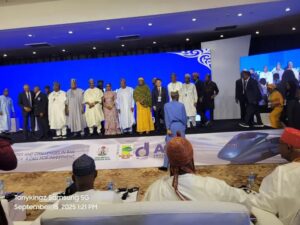
This high-speed rail collaboration represents a new chapter, one that goes beyond construction to embody technology transfer, investment synergy, and shared prosperity. In this respect, the Abuja summit showcased a continental model of cooperation.
Retrospectively, the story of Nigeria’s railways has been one of lost opportunities. From the colonial-era narrow-gauge lines built to serve extractive economies, to decades of neglect that left much of the system moribund, the sector became symbolic of underdevelopment. Today, however, Nigeria is on the cusp of rewriting that narrative.
The lessons of nations like China, Japan, and France, where high-speed rail redefined economic integration and regional balance, are being adapted to African realities. If the bullet train vision becomes reality, Nigeria could well become the pioneer of African high-speed connectivity, linking not only its major cities but also its economy to those of its neighbors.
In his declaration, President Tinubu opined that the summit is not just an event, but a statement, that Africa is ready to build its future through rail. His words echoed the optimism in the hall and the collective determination to make rail the backbone of Africa’s industrial growth and sustainable development.
The International Railway Summit & Expo 2025 thus closed not as a ceremonial gathering, but as a catalytic platform, one that reaffirmed Nigeria’s leadership, lauded the foresight of the Ministry of Transportation, and acknowledged the pivotal role of partners like De-Sadel Consortium. It was, above all, a bold proclamation that the future of African rail begins here, in Nigeria.
